Saturday, 23 April 2016

Starting from the Bottom...and Now We're 3rd

Our tier 1 ultimate team went to our first tournament in February, and promptly lost every game we played.  However, there were some good plays and great sharing by the team.  These are good signs as we shared the disc with everyone and swung the disc around from side to side:
The tier 1 team is warming up, and my colleague who has the same last name is excited to be at her first ultimate frisbee tournament.


Another great sign of the future was foreshadowed with this play with great defence from a grade 9 and terrific anticipation by another grade 9 to go for the score.  I'm proud of the way they competed against older and more experienced players:


Our tier 2 team did a little better by losing 4 games and tying the last - but we beat them by spirit points and won the spirit award for the tournament.  This assured that we brought home hardware two years in a row at this Toronto tournament.  Last year we won the tier 2 tourney and this year we got the spirit award, completing the collection.


I could tell this year's chemistry was something spec,ial as we came home from losing every game. Everyone's spirits were high from experiencing ultimate at such a high level.  Our beginning cheer is epic and our final cheer is pretty much always right on point.  It's not complete with the manager playing the guitar!  It was the bus ride home that really got to me - the buzz after a full day's tournament was really strong.  Many people in the bus were playing heads up with each other or having a good conversation.  Some were sleeping (it's a long day) but in general the team was upbeat. 

We practiced hard for the next month with a couple alumni coming into practice for some extra help.  7am morning grinds as well as after school practices got us into the work mode.  We improved a lot, but they couldn't tell....until we entered our next tournament - the Husky Huck. 

We started off the tournament with two strong wins to win our pool.  It was convincing with a balanced attack with points coming from everyone and going to everyone.  No one player dominated the pitch offensively.  It was a treat to watch.  

Our first playoff game was a tough one against a rival in TDCH.  We got down early but came back in the end as we showed great resilience and grit.  We dug deep and believed in ourselves to get back into the game.  Even though we lost, we learnt quite a bit.  

We played for 3rd in our final game and ended victorious.  We made adjustments in our activity level and beat another rival that beat us last year in the playoffs.  And really, I keep mentioning the final result when I believe that those results are just icing on the cake.  The real result is that the players are developing and getting better.  They're learning loads and adjusting well.  We are sharing the disc amongst all players - including the females on the team.  Our females have the confidence to throw forward.  I'm so proud that they've taken the initiative.  

It's considered a genderless sport and I'm trying to champion that.  

I'm also proud of the trust that the males have placed on them by throwing the disc to them and then running ahead to demand for the disc instead of standing behind them asking for a backwards pass.  

The bus ride home was really fun.  The sun was shining and there were no cliques.  Everyone was talking to everyone.  The team was again very upbeat and the mood was happy.  Multiple games of heads up occurred at the front and back of the bus...and even the most quietest of players would take part. 

The captain of the team organized a team dinner 3 weeks ago because she wanted to build the team up.  They played ice breakers and everything to try and break down barriers.  Looks like she succeeded.  

I completed my goal.  It's their team.  They own it.  They're happy.  They learnt a lot.  

I have two managers helping me with the administrivia.  I have two alumni starting to come out more regularly because their 1st year in university is done.  

I could just stop here and be really happy about the team, but we're only halfway through the season. We are starting outdoor season now.  

Fitness time.  

Disc up.  

Saturday, 9 April 2016

Presenting at YRDSB's Edtech Spring

Today I presented to a total of 3 people for the second iteration of "To Boldly Blog where No Blog has Gone Before".  It was quite the different experience compared to my first time I presented for my 2016 QUEST conference with 60+ people from all over the world.


That time I didn't have my slides organized, I was trying to use Pear Deck for the first time, and I didn't know exactly what I wanted to say.  Needless to say, it wasn't very good.

Today, I distilled the presentation down to some key concepts producing an overall better organization. I allowed for some genuine conversation and discussion among the audience (easy to do with 3 people)- which actually allowed me to learn quite a bit.  

I had a senior kindergarten teacher, an intermediate French teacher who is part of the ETFO executive, and a person from the Director's office.  The vastly different perspective on education allowed me learn so much outside of my secondary school niche and it was an incredible exchange of information (at least for me).

As for blogging, the needs of the senior kindergarten teacher were unique and I was able to help her out with the newsletters that will connect with parents directly instead of relying on 3-4 year olds who lose those pieces of paper between the end of school, daycare, and home.  Communicating with the parents who want the constant updates that they used to receive from daycare was another purpose of the blog that I was able to help her with.

                                          Caption:  Edtech 2016 first time presenters!

Overall, this was a great experience as I learned much through the informal conversations as well as trying to meet the needs of my 'students' as they tried to create their own blog that serves its own needs.


Monday, 15 February 2016

Modelling the Expansion of the Universe

When teaching the space portion of this course, there isn't a lot of labs I can do when I compare with the chemistry, biology, or physics teachers.

However, when I do get the chance to do a lab - I'll jump on it.

Here we are, modelling the expansion of the universe with elastics trying to get something similar to Hubble's constant.  Each paperclip represents a galaxy and when you stretch the elastics in between each galaxy, you measure the change in distance from one chosen home galaxy and the others.

Fig 1: I hope they fixed the crooked rulers...

It's a lab that can be done with my grade 9s.  However, the analysis level and connection to the actual expansion of space might not be up to a level that I would like.

I've had some interesting error analysis questions as well as deep questions that strive for true understanding.  (ie:  improvement of measurement in the above picture - ie:  use of tiles? )  What this actually models and how it holds up to current theories about the universe and where it breaks down - all of these are important aspects of the lab that I hope we extract at some point.


Sunday, 14 February 2016

Earth and Space Science - my second year teaching

Second semester has arrived, and that means it's earth and space science time!  This is the second year teaching it, and my goodness, my comfort level with this course has skyrocketed.

It certainly helps that my wife is teaching the same course, and we are learning it at the same time.  On our road trips, we wouldn't listen to music - we would download audiobooks and lectures from Neil Degrasse Tyson and Robert Hazen and get the education we needed in space and earth respectively.  I have read most of Carl Sagan's Cosmos book (thanks to last year's students who bought me that book)  and the textbook that my students use.  I know...my wife and I are both geeks.  But, we both love learning.  Here is the comparison of how I feel from last year compared to this year:

  • I can now elaborate on my slides as opposed to just reading.  
  • I can answer a good percentage of questions that they have.  (at least thus far)
  • The engagement level is much higher, even with a much bigger class of 27. 

It's weird - but I'm changing the way I will teach this.  I understand that the students mostly take this course for space - so I will put all the cosmology stuff at the beginning.  However, with the next 4 strands - I will be spiralling through the curriculum.  I will weave my way starting with a little bit of minerals, to touch upon volcanoes, geologic time in the first spiral.  My second spiral will weave through rocks, more volcanoes, geologic time and and planet formation.  The rest of the spiral organization is laid out with my thought processes here, with each column representing one spiral.


Now that I have tried the spiral curriculum when I taught grade 9 applied math, I know what advantages and disadvantages it has.  I know what content lends itself to each of the linear and spiral curriculum.  

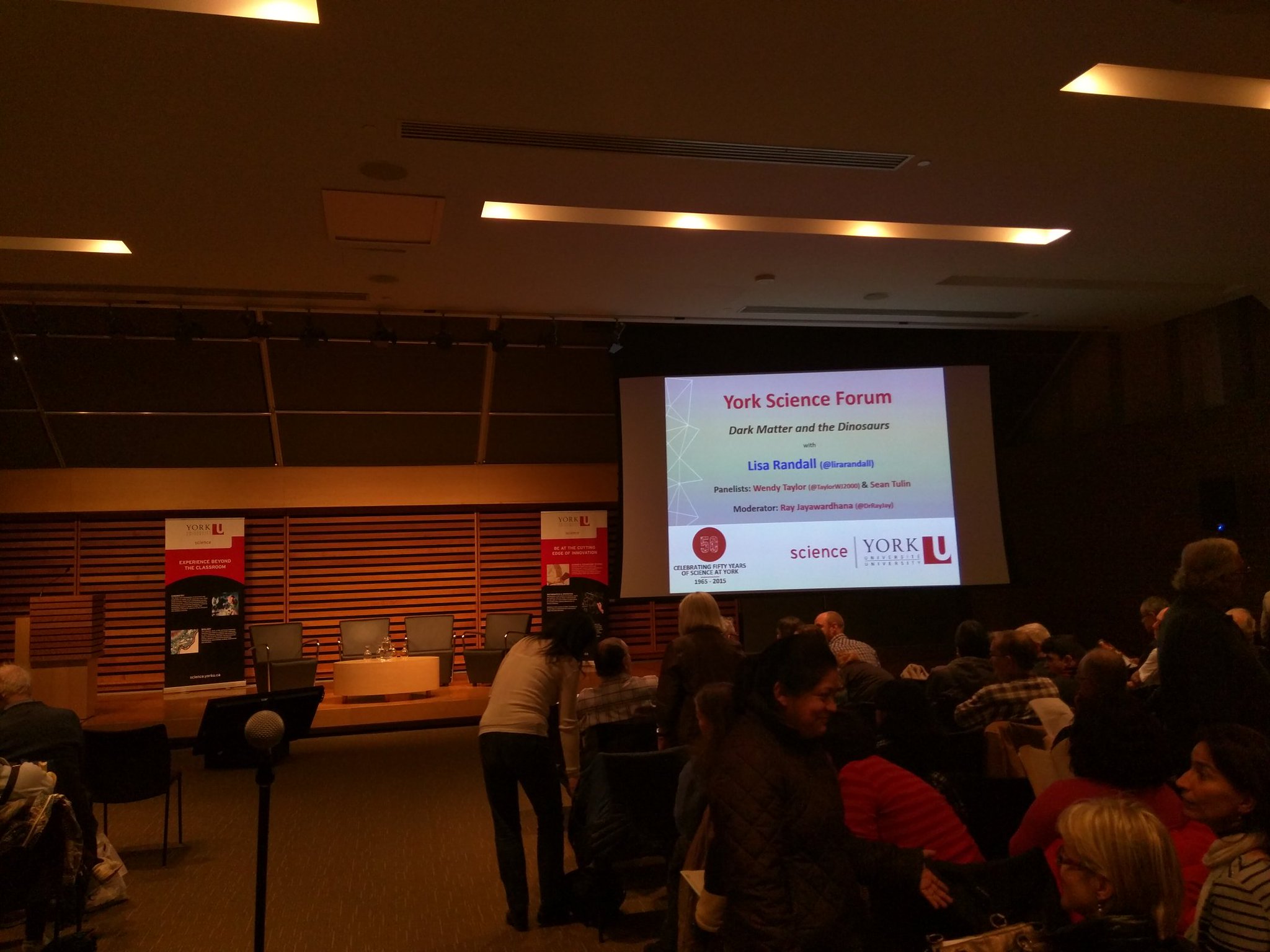
One of the coolest things that I have been emphasizing thus far is the contribution of females to this science. Astronomy and cosmology is a science that we're still learning much about and we certainly don't understand much of it even at this point.  We are still developing tools to study what's way out there.  (Hello gravity waves!)  Females now have more access to education than 200 years ago, and one can see their contributions from Leavitt's discovery between absolute brightness and periodicity between maximum and minimum brightness to today's Lisa Randall's "Dark Matter and the Dinosaurs".  Now that women can touch telescopes and things are opening up for them a little, we will see more and more contributions like Lisa Randall's.  I certainly enjoyed her lecture at the Toronto Reference Library.  

I'll show the Cosmos reboot episode entitled "Sister's of the Sun" by Neil deGrasse Tyson later on this week to show other men and women's contribution to our understanding of space and stars.

My ultimate frisbee team is also asking for more practices and they're getting anxious because they're unfamiliar with the system.  Looks like more 5am wakeups for me!


Sunday, 24 January 2016

Character Education - Honesty with Marks

One of the things that I wonder about as a teacher is the relationship between marks and learning. While this debate can run quite deep with some teachers advocating to do-away with marks entirely and others on the opposing spectrum to anything in between.

 I am going to look at this from the student's perspective.  Especially when it comes to grade 12, many students focus solely on mark grabbing and hopefully learning occurs along the way.  I try to emphasize that if students focus on learning as the priority, then the marks will naturally come.

It's just easier, from the student's point of view, to focus on getting marks first which promotes behaviours that I don't consider 'true learning' such as passing around last year's tests, studying at the last second for the short term memory thing, cheating, and memorizing.    

Some will say it's the teachers' fault for setting up this system.  Others' will fault the universities' inability to sort through candidates other than through marks.  It might be a little from column A and a little from column B, and even from an unknown C that I haven't quite considered. 

The beauty of being a teacher is that in many ways, I control the classroom.  In my little world here, I can highlight and contrast the difference between a mark grabbing student and a student that learns for my own students.  

Every year, at the beginning, my students write a diagnostic that does not count for marks.  When I mark it the multiple choice portion, I purposely:

1)  take away a mark that they deserve 
2)  give them an extra mark that they do not deserve

In the end, their mark stays the same.  However, after I take it up the test and show the marking scheme, I go around individually to each student asking how I should change their mark.

I have found in the two years  that I have done this, many students state that their mark goes up by 1, a few ask to bring down their mark by 1, and many so no change.

I then ask the students to reflect on their action.  I cannot judge what they did because I do not know the rationale behind their action but I take the time to highlight the following:

A)  If you asked me to reduce your mark knowing full well you deserve another mark, then you are too hard on yourself.  You deserve another mark, and should ask for it - after all, you got the answer right as well as another question wrong.

B)  If you asked me to increase your mark by 1 or decrease your mark by 1 because you didn't notice the other mistake I made, then you have to pay attention a little more during test takeup.  This is a time to learn from your mistakes, which is quite often the best time to learn.  Be a little more detail oriented and listen carefully for these are important skills in life. 

C)  If you said "no change" because you didn't notice anything wrong, then you are not paying attention whatsoever.  (I may run the risk of an IEP student that has issues with the delivery, but I do make sure to show the multiple choice answers visually and say the answers aloud for each question so that should cover most minor IEPs.)

D)  A few students say "no change" but have already done their self-reflection on what question was actually right and what question was wrong.  This is fine as well.

E)  Each class, there's always one or two students that tell me explicitly that I marked one question right and one question wrong, showing true transparency to me.  This is awesome, and it is something I tell them I try to do for them as a teacher.

F)  This is the last option I go over.  I've learnt to explain this last option gently as a few of my more sensitive students feel guilty even when they didn't do this.  If a student asks for a +1 in marks knowing full well they should have a no mark change, then I ask these students that find themselves in this position to do some deep reflection.  I state: "You have just lied to me about your mark.  What did I do to you in the last week to deserve this?  (hopefully I did nothing wrong in the past week to start the school year off).  You have just inflated your mark to your parents about your mark.  Above all, you're willing to lie to yourself and pat yourself on the back for getting a higher mark than you deserve.  If you're willing to lie to yourself to inflate your mark, lie to me who has done nothing to you, and even your parents on a diagnostic test that doesn't even count for marks - what are you going to do when it comes to money or other situations?

This year, I delivered my speech well.  I returned a test on January 4th, and made a mistake on a multiple choice question.  This is almost 4 months after my little stunt.

Class 1:  I had 7 students come to for a mark increase. I had 8 students come to me for a 1 mark decrease.

Class 2:  I had 8 students come for a mark increase and 7 marks come for a mark decrease. 

As you can see, grade 9s are very receptive to this sort of thing.

When I pull this stunt with my grade 12s, I get into deep debates with my grade 12 students when I ask them these questions.  The one thing they always bring up is that this mark is so small, it doesn't matter.  From their perspective, this if this one mark occurred on a summative assessment, it would help them in their goal to getting into university and it doesn't hurt anyone.  If it doesn't hurt anyone, why not do it?

We then go back and forth about the fact that if you increase your marks unfairly to get into a university program, you're kicking someone else out of the same university program.


I know deep down that the system will have to change to have any permanent effects, but in the end, it's a fun debate and a good exploration on what honesty really means.  I learn much of my students in this little experiment and I'll probably continue to do it. 

Friday, 22 January 2016

Iterations Improving the Proficiency of my 3-Act Math Delivery

NOTE:  This is a late post - supposed to have been published last month but I've only recently found time (during exams) to post it.

For today's lesson, we turned to Dan Meyer’s video question on which cup contained more juice.  Here's my powerpoint that goes with it:  


It is a splendid 3-act problem that inspired some interesting questions.  However, the quality of their questions has decreased since September; the questions had more depth, and their observations keen.  Now, they are just giving me the question that I am looking for.  Wasn’t the whole point to emphasize the questioning to clearly define problems a little more?  It looks like I’ve fallen hard into my habits and have prized THE answer as opposed to prizing the question and problem definition. 

Wow, blogging really forces me to reflect more than usual.  It just dawned on me that the reason why the question quality has been decreasing since September is that I don’t answer all of their questions.  There were so many quality math questions that were generated by the students from the videos in September but I ignored the most quality ones because they would probably take a day to answer. 

I have placed 100% more importance on following my scheduled spiral curriculum than their curiosity. 

Looking back, I should have made more of a compromise, and actually followed through with at least a few of their questions.

It would show a lot more teacher willingness to venture into the unknown and really value their questions.  Following through to try and answer their questions would actually demonstrate how I learn – one of the most important things to model.   Instead, I’ve trampled on their curiosity and lost that opportunity to be a role model of a real learner. I feel really badly now. 

But, can’t be ruminating now, can we?  I’ll just change it for next semester.

So I’ve digressed.  Going back to the 3-act question:

After receiving their questions, I specified the question that we were going to answer today.  Which cup has more, and by how much? 

Here are their guesses as a completion to act 1: 


It’s interesting to see how many of them chose that cup A and cup B had the same amount. 
Nevertheless, act 2 came along, and with those measurements and the conversion ratio the students went about to work. 

After about 15 minutes of discussion and hard work on large whiteboards, the students put their answers on at the front.  Only 10% of them got the right answer:


 The stumbling point for many students was the CONVERSION!  I have to find another way of teaching conversions as I have been repeating it throughout the year and it still hasn't sunk in. 

In truth, the fact that many of my students weren’t able to complete this question in pairs disappointments me. 

I made this question into an entrance card to repeat for tomorrow in hopes that the students will get it during their second try.

I will take it up and repeat a similar question as an assessment on the next Friday. 


Update:  They did very well on their assessment.  I wonder if they’ve gained any ‘permanent’ skills along the way in this process or if they've just memorized the process.  I will only find out later I guess especially with that EQAO coming up soon.  

EQAO - math standardized test - the time is here..

Wow.  We just finished the EQAO and it looks like it's been quite a success.  The students, according to my marking, have scored the highest they ever have compared to the previous two times I've taught the course.  In their feedback of how they felt about writing the EQAO, the students reported a high level of satisfaction upon completing the test.


The success comes as no surprise as I've never had engagement like this before.  However, it just feels pretty good to have this spiral curriculum and 3 act math pay off.

Well, of course, I think in order to really see if all of this did work, I should compare their grade 6 math EQAO marks to their grade 9 EQAO results to see if I really did make a difference.  We'll have to wait until next year for those results.

I'll just have to wait, then.