Showing posts with label earth and space science. Show all posts

Thursday, 19 May 2016

Kahoot is a Hoot!

One day, one of the students didn't have their presentation ready.  My emergency backup lesson plan was to run a kahoot on random space questions.

Kahoot.it is the latest in clicker software, where students can use any technology whether it is a phone, laptop, ipad, etc.  It's a good thing I was in the 21st century classroom as any student without a mobile device went over and grabbed a laptop or ipad.  

Kahoot measures who gets the answer quickest and awards the fastest student...or teacher in my case.  


However, I didn't always win - the youth that my students have over me was shown in the next game. Their reflexes were much faster. See exhibit B below:


Anyways, I had quite a bit of fun and was fully engaged.  Some students took notice and included a kahoot into their next presentation.  (I lost that one too...but my excuse was that I didn't fully pay attention to content as I was scribbling notes on their presentation as a whole to help provide them with feedback on their next presentation).


Monday, 15 February 2016

Modelling the Expansion of the Universe

When teaching the space portion of this course, there isn't a lot of labs I can do when I compare with the chemistry, biology, or physics teachers.

However, when I do get the chance to do a lab - I'll jump on it.

Here we are, modelling the expansion of the universe with elastics trying to get something similar to Hubble's constant.  Each paperclip represents a galaxy and when you stretch the elastics in between each galaxy, you measure the change in distance from one chosen home galaxy and the others.

Fig 1: I hope they fixed the crooked rulers...

It's a lab that can be done with my grade 9s.  However, the analysis level and connection to the actual expansion of space might not be up to a level that I would like.

I've had some interesting error analysis questions as well as deep questions that strive for true understanding.  (ie:  improvement of measurement in the above picture - ie:  use of tiles? )  What this actually models and how it holds up to current theories about the universe and where it breaks down - all of these are important aspects of the lab that I hope we extract at some point.


Sunday, 14 February 2016

Earth and Space Science - my second year teaching

Second semester has arrived, and that means it's earth and space science time!  This is the second year teaching it, and my goodness, my comfort level with this course has skyrocketed.

It certainly helps that my wife is teaching the same course, and we are learning it at the same time.  On our road trips, we wouldn't listen to music - we would download audiobooks and lectures from Neil Degrasse Tyson and Robert Hazen and get the education we needed in space and earth respectively.  I have read most of Carl Sagan's Cosmos book (thanks to last year's students who bought me that book)  and the textbook that my students use.  I know...my wife and I are both geeks.  But, we both love learning.  Here is the comparison of how I feel from last year compared to this year:

  • I can now elaborate on my slides as opposed to just reading.  
  • I can answer a good percentage of questions that they have.  (at least thus far)
  • The engagement level is much higher, even with a much bigger class of 27. 

It's weird - but I'm changing the way I will teach this.  I understand that the students mostly take this course for space - so I will put all the cosmology stuff at the beginning.  However, with the next 4 strands - I will be spiralling through the curriculum.  I will weave my way starting with a little bit of minerals, to touch upon volcanoes, geologic time in the first spiral.  My second spiral will weave through rocks, more volcanoes, geologic time and and planet formation.  The rest of the spiral organization is laid out with my thought processes here, with each column representing one spiral.


Now that I have tried the spiral curriculum when I taught grade 9 applied math, I know what advantages and disadvantages it has.  I know what content lends itself to each of the linear and spiral curriculum.  

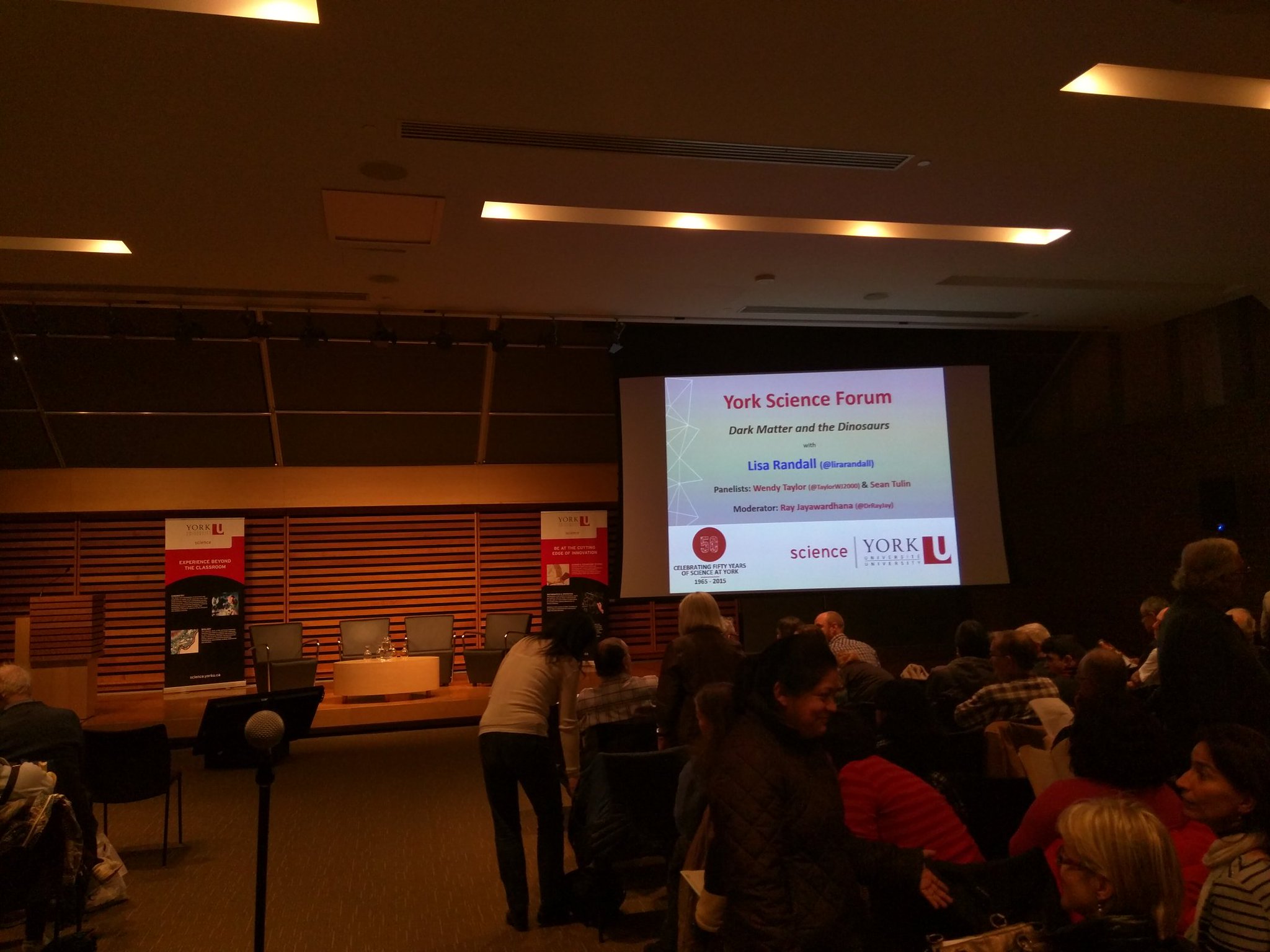
One of the coolest things that I have been emphasizing thus far is the contribution of females to this science. Astronomy and cosmology is a science that we're still learning much about and we certainly don't understand much of it even at this point.  We are still developing tools to study what's way out there.  (Hello gravity waves!)  Females now have more access to education than 200 years ago, and one can see their contributions from Leavitt's discovery between absolute brightness and periodicity between maximum and minimum brightness to today's Lisa Randall's "Dark Matter and the Dinosaurs".  Now that women can touch telescopes and things are opening up for them a little, we will see more and more contributions like Lisa Randall's.  I certainly enjoyed her lecture at the Toronto Reference Library.  

I'll show the Cosmos reboot episode entitled "Sister's of the Sun" by Neil deGrasse Tyson later on this week to show other men and women's contribution to our understanding of space and stars.

My ultimate frisbee team is also asking for more practices and they're getting anxious because they're unfamiliar with the system.  Looks like more 5am wakeups for me!


Wednesday, 8 April 2015

Creating Crystal Methods in the Lab

In the past two weeks we spent some time developing a good procedure and adjusting the procedure to grow the biggest crystal we could given a set amount of material.  Here are some of the results.

Chemical #1:  Cupric Sulfate

The characteristic blue of this copper really had me excited as it would have been interesting to see a large blue crystal.  The majority of the crystallization occurred at at the bottom of the beaker instead of the hanging crystal seed, so it didn't turn out as large as ED, RQ, and SC had hoped.

Picture 1: Crystallization occurring on hanging seed crystal with simultaneous crystals growing along bottom of beaker. 

Picture 2:  Crystallization happening on bottom - due to impurities at the bottom of beaker

Chemical #2:  Sodium Chlorate

The cubic structure of sodium chlorate was really evident in this jar.  As you can see in the pictures below, the layers of cubic sodium chlorate that accumulated on top of one another was absolutely breathtaking.  

 Picture 3:  Crystallization occurring on seed crystal as well as some impurities at bottom of jar.  If you look really closely, you can see the crystals growing on the nylon string near the top of  the beaker.  

  Picture 4:  ED, RQ, and SC decided to make multiple crystals and were able to grow multiple in different jars.  Of particular interest are the two cubes that have joined together.  

    Picture 5:  ED happy with his baby crystals. One is named Jerry, the other is a John Doe.  
  That's a picture of a proud father, right there.   

Chemical #3: Chromium Alum

Unfortunately, this beautiful black crystal suffered the same fate as the cupric sulfate.  
 Picture 6:  Crystallization at the bottom of beaker.  =( 

  Picture 7:  OH and MA were able to crack some crystals from the bottom.  

 Picture 8:  Some of the larger crystals that were extracted.  

Picture 9:  My favourite crystal. You can see its shape is almost perfectly octahedron.  The math teacher in me is quite pleased at the almost perfect symmetry of this crystal.

Picture 10:  OH and MA with their chromium alum octahedron crystals.  

Picture 11:  The rest of the class' sugar and salt crystals in a contest.  

I look forward to reading their reports that will maybe offer some reasons as to why certain crystals were able to grow well and others not so well.  Their recommendations in improvements to the procedure will be especially interesting, and I'm considering passing on their observations on to the next group next year to enlarge the crystals.