Showing posts with label spiral curriculum. Show all posts

Sunday, 14 February 2016

Earth and Space Science - my second year teaching

Second semester has arrived, and that means it's earth and space science time!  This is the second year teaching it, and my goodness, my comfort level with this course has skyrocketed.

It certainly helps that my wife is teaching the same course, and we are learning it at the same time.  On our road trips, we wouldn't listen to music - we would download audiobooks and lectures from Neil Degrasse Tyson and Robert Hazen and get the education we needed in space and earth respectively.  I have read most of Carl Sagan's Cosmos book (thanks to last year's students who bought me that book)  and the textbook that my students use.  I know...my wife and I are both geeks.  But, we both love learning.  Here is the comparison of how I feel from last year compared to this year:

  • I can now elaborate on my slides as opposed to just reading.  
  • I can answer a good percentage of questions that they have.  (at least thus far)
  • The engagement level is much higher, even with a much bigger class of 27. 

It's weird - but I'm changing the way I will teach this.  I understand that the students mostly take this course for space - so I will put all the cosmology stuff at the beginning.  However, with the next 4 strands - I will be spiralling through the curriculum.  I will weave my way starting with a little bit of minerals, to touch upon volcanoes, geologic time in the first spiral.  My second spiral will weave through rocks, more volcanoes, geologic time and and planet formation.  The rest of the spiral organization is laid out with my thought processes here, with each column representing one spiral.


Now that I have tried the spiral curriculum when I taught grade 9 applied math, I know what advantages and disadvantages it has.  I know what content lends itself to each of the linear and spiral curriculum.  

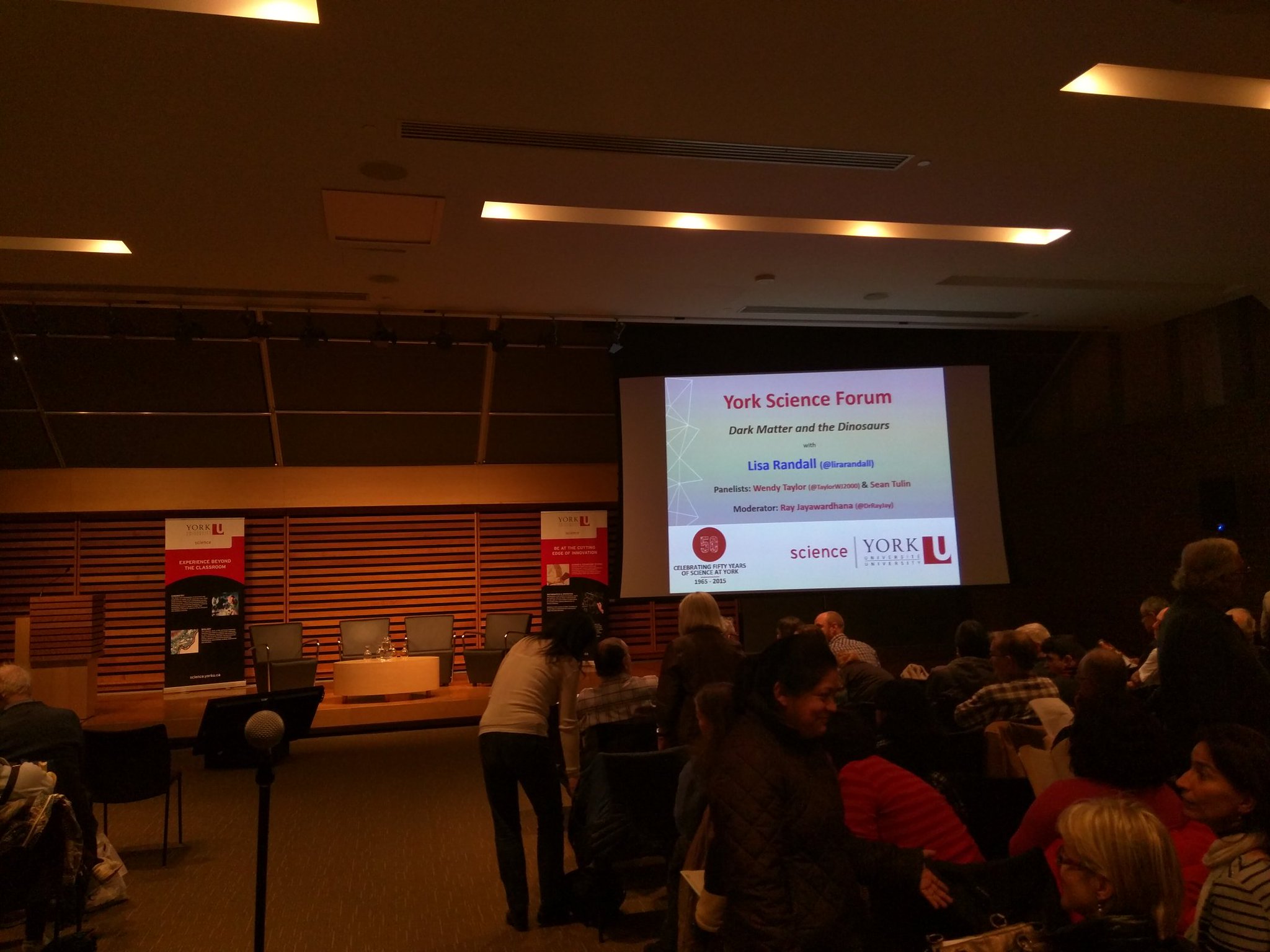
One of the coolest things that I have been emphasizing thus far is the contribution of females to this science. Astronomy and cosmology is a science that we're still learning much about and we certainly don't understand much of it even at this point.  We are still developing tools to study what's way out there.  (Hello gravity waves!)  Females now have more access to education than 200 years ago, and one can see their contributions from Leavitt's discovery between absolute brightness and periodicity between maximum and minimum brightness to today's Lisa Randall's "Dark Matter and the Dinosaurs".  Now that women can touch telescopes and things are opening up for them a little, we will see more and more contributions like Lisa Randall's.  I certainly enjoyed her lecture at the Toronto Reference Library.  

I'll show the Cosmos reboot episode entitled "Sister's of the Sun" by Neil deGrasse Tyson later on this week to show other men and women's contribution to our understanding of space and stars.

My ultimate frisbee team is also asking for more practices and they're getting anxious because they're unfamiliar with the system.  Looks like more 5am wakeups for me!


Thursday, 10 December 2015

A Student Teacher, Teaching the Teacher

A Lesson on Felicia

I have ALMOST given the full reins to my student teacher lately every Thursday when she comes to volunteer. 

I use the word ‘almost’ because a student teacher never truly has their classroom management tested as they’re walking into a classroom with established norms and systems in place that hopefully protect supply/student teachers. 

I’m also in the room while she teaches, which affects the management of the classroom.  

On a separate note, for the first time in eight years, I can say that my applied classroom norms extend strongly even when I have a supply teacher (given the comments they leave behind).  That’s how receptive my students are this year. 

That just means that next year, my students will be wild and out of control, doesn’t it?

On the other hand, my student teacher is incredibly talented and is in her final year of teachers’ college.  I have learnt much from her style, approach and her creativity; case in point, take a look at her lesson on Felicia that she made up:

The question, I could see, resonated with the girls in my classroom.  I guess after questions involving video games, Usain bolt, etc. this was something new. 

My student teacher and I coordinated through my spiral curriculum well as the question was just a touch out of their comfort zone as they just finished learning solving equations and we’ve been through perimeter and area about two times before in previous spirals. 

The question was challenging as they got into groups of two or their ‘rate of change’ partners.  This question demanded the large whiteboards.   


For some reason, the students have been naturally lately looking to group their pairs into group of 4s and 6s.  I immediately broke up the group of 6 as I know that group was just too large.  I let the group of 4 stay as I knew that particular group of 4 worked well.  I still, prefer pairs, so I'll probably split them up next time.  

However, I wanted to see how well they worked and learnt; the next day, I went over it briefly and summarized positives and negatives of each group in terms of their process work, communication, without stating the answer. 

To truly assess how well they worked, I put up the question again.  Now, usually I am not a fan of re-doing a question, or re-assessing the same question, giving multiple opportunities, and doing it in groups…but I’ve been reading so many positive reviews of it that I decided to truly try it again.

It actually worked.

For thinking style type questions, putting the students in groups and allowing multiple opportunities created an environment of learning.  The majority of students actually tried it on their own (except the bottom 5% of the class where collaboration occurred immediately..) before starting to compare answers.  Upon finding differences, these students went through learning conversations where they justified each other’s work. 

For a question that we did yesterday and that I took up earlier, it took almost 20 minutes to get it done.  Some students didn’t even finish.  I guarantee you, as I walked around the classroom listening to their conversations, none of them were fooling around. 

Mind you, I still hesitate at the thought of doing summative thinking questions in groups with my academic students because I know the ‘Mr. Shin caught your mistake’ current environment I’ve set up would cause more of my students to copy off other students as opposed to learning it. 

I am really going to have to rethink my teaching as I found that those rich discussions that the students had with each other is worth designing the curriculum for.    

What’s hilarious is that the education world made this discovery about math education about 5 years ago when Dan Meyer first landed in a TedX talk.  Education has already moved on from this to the next phase – but at this point, the latest stuff is too progressive and far left reaching for me. I've never been an innovator; I've always been a late adopter myself to make sure the 'latest' trend actually sticks around and works with the common teacher.

Maybe if I was an elementary school teacher, I would make the jump ASAP to the latest educational trend; but as a secondary school teacher where post secondary institutions require a certain level of standardized skill, I don’t think I could ever make that jump.  

Maybe in another 5 years I’ll make the switch if it has proven to be more than the latest trend.

Things just move so fast. 


Anyways, I’d like to take this opportunity to thank my student teacher for using her beautiful question as a springboard into student learning as well as mine.  

Monday, 7 December 2015

Success! Students Create, Solve, and Assess Equations all on Their Own

I just marked the students' test on spiral #9 which included a) volume of pyramids and b) solving equations.

Volumes of Pyramids
16/22 members of this applied math class achieved level 4 or higher on this multi-step pyramid that involved using the pythagorean theorem first.  Since this is the third time spiraling through pythagorean theorem, this high success rate is not surprising.


Solving Equations
Regarding the solving of equations - take a look at what they produced on the test:


Needless to say, they aced the other questions where they had to solve my equations.  However, their formal LS and RS checks needed a little work, and during their reassessment next week, they hope to capture that portion of the test. 

It shows that the formative peer work they did the day before worked.  I didn't have to do any marking to provide the feedback that they needed.  This community that the students have created in the past 3 months have allowed them to embrace their mistakes.  The amount of learning was exponential as the students were making their own questions on their whiteboards and discussing with each other their own individual problems.  They found each others' mistakes and they would justify to each other why it was a mistake.

Some students thought that a decimal/fraction answer was a "mistake"; they went back and "corrected" the question that they created so that the solution was an integer.  The process of critical thinking necessary to justify and correct it was fun to watch; however, I have put in a mental note for the students' need that a real number (non-integer) is a number too.

I'm glad that none of my students have stated any racist or sexist or any other inappropriate comments; but they certainly are 'fractionists'.  I have to figure out a way to expand their thinking on this one.  

The whiteboards' non permanent surface is a boon for students as there is no eraser mark, white-out, or need for an official eraser.  It encourages students to just write out their thoughts, display their thinking, and promote discussion. 
 
I wish I had employed the spiral curriculum since my first year of teaching with these applied students, as this success rate has been absolutely unbelievable.

At the same time, I have a couple factors that are exaggerating the spiral curriculum's success:

1.  I have motivated kids.  My level of engagement is even higher than that of my academic classes.  Dan Meyer's 3 act math had something to do with that.

2.  I have students with extremely strong learning skills this year.  My classroom management micromanaging at the beginning has paid off continual dividends that the students reap every day.